Prepare For Your Appointment

Your eye exam will go beyond testing. Our team will help you understand your eye health and feel confident in your care.

What to Know Before Your Visit

Play Video
Video thumbnail

Appointment Checklist

Use this quick checklist 1–3 days before your visit. If you need to reschedule or cancel your appointment, please kindly give us at least 24 hours’ notice to avoid cancellation or no-show fees.

Confirm appointment: Check your text messages and/or email for any appt reminders.

Complete any forms in advance if you received a preregistration link or are using the patient portal.

Bring your vision insurance card and your medical insurance card (if you have both).

If you are a new patient, please bring any prior eye care records, especially if you have a history of eye disease, surgery, specialty care, or ongoing treatment.

Write down your medications, vitamins, and supplements. A simple list is fine.

Bring your glasses and/or contact lenses, along with your current prescription if you have it.

Plan for possible dilation. Bring sunglasses and consider arranging a driver.

Arrive 10–15 minutes early to check in at the kiosk or complete any additional paperwork.

Due to testing and dilation, plan for about 1–2 hours for your visit. Feel free to bring something to read or do while you are here.

Insurance Cards: Vision vs. Medical

Bringing the right insurance cards helps our team verify your benefits, file your claim correctly, and reduce delays or billing surprises. Different types of eye care are billed differently. We recommend bringing both your vision and medical insurance cards, especially if this is your first visit.

If you are scheduled for a routine eye exam with an Optometrist, please bring your vision insurance card. Vision benefits are typically used for routine exams, glasses prescriptions, and contact lens fittings.

If your appointment is for anything other than a routine vision exam, please bring your medical insurance card. Medical insurance is generally needed for visits related to eye disease, symptoms, specialty testing, emergency eye concerns, diabetic eye exams, glaucoma evaluations, eye pressure checks, cataracts, retina care, surgery consultations, or follow-up care for a medical eye condition.

Important Billing Note

Please be aware that medical insurance and vision benefits cannot be billed for the same appointment. If you require both a medical eye evaluation and a refraction (the test used to determine your glasses prescription), you may need to schedule two separate appointments. Alternatively, you may opt to pay out of pocket for the refraction portion in some cases.

Dilated Eye Exams

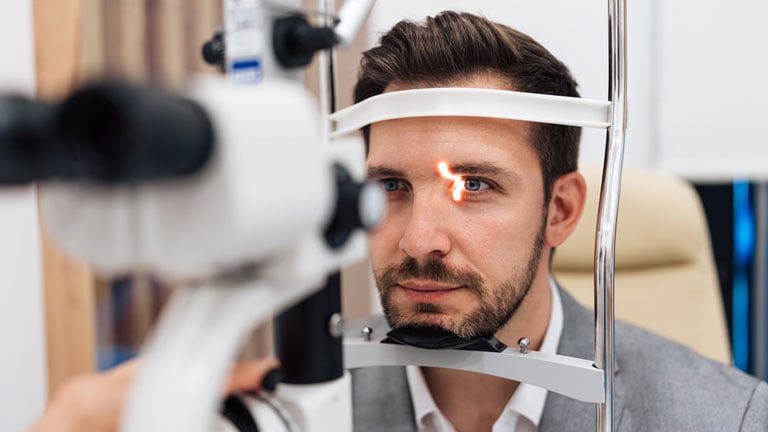
Dilation uses special eye drops to widen your pupils so your doctor can get a better view of the inside and back of the eye.

Dilation may be recommended based on your age, overall health, eye history, symptoms, and risk factors. Your doctor may perform a dilated eye health exam before any refraction or glasses prescription testing, depending on the reason for your visit and your eye health needs.

Dilation uses special eye drops to widen your pupils so your doctor can get a better view of the inside and back of the eye. This allows your doctor to check for common eye diseases, often before symptoms become noticeable.

For a few hours after dilation, your vision may be blurry, and your eyes may be more sensitive to light. Sunglasses can help. Many patients can drive after dilation, but some prefer to arrange a ride home if driving feels uncomfortable or unsafe.