

Dry eye, also called dry eye syndrome, is a common condition that can impact your quality of life. This eye health condition makes it a little harder to be productive at work, and it can affect your time with family and friends. Dry eye syndrome can also cause pain, light sensitivity, and redness in one or both eyes. Adopting lifestyle changes or seeking simple home remedies for dry eyes is a good first step toward treating this eye condition.
However, if your condition continues or worsens, or if your pain level increases or your eye color changes, see an eye doctor immediately. Before we get into dry eye home remedy treatments and tips, it first helps to understand common causes of dry eyes.
What Causes Dry Eyes?
The most common cause of dry eye syndrome is insufficient tear production. Dry eye syndrome can develop due to medical conditions, environmental factors, and even specific medications, such as:
- Antihistamines
- Nasal decongestants
- Drugs that lower blood pressure
- Hormone therapy and oral contraceptives
- Acne medication
- Anti-depressants/anti-psychotic
- Medicines for Parkinson’s disease
Risk Factors For Dry Eye
- Advanced age: 65 and over
- Gender: Female
- Frequent use of contact lenses
- Smoking
- Low blink rate due to prolonged screen time
- Vitamin deficiencies
- Autoimmune conditions, such as lupus, Sjogren’s syndrome, scleroderma, and rheumatoid arthritis
- Chronic diseases such as diabetes
- Environmental extremes
Learn more about what causes chronic dry eye.
13 Simple DIY Solutions for Dry Eyes
Getting your eyes tested helps doctors diagnose dry eye syndrome, identify other eye issues, and understand the underlying cause of your condition. Are you wondering how to get rid of dry eyes in the meantime? You may be able to find relief with these simple home remedies for dry eyes:
1. Wash Your Eyelids and Lashes
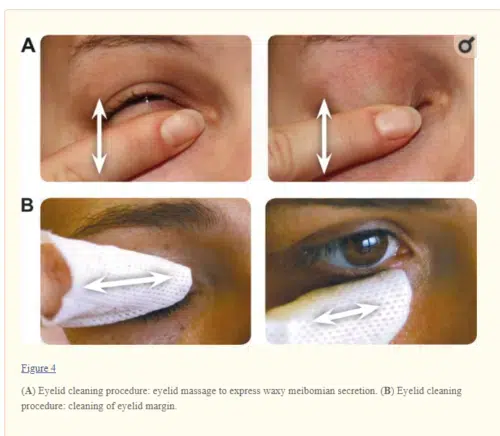
Proper cleansing is the first line of defense against dry eye. When you wash your face, pay careful attention to your eyelids and eyelashes, as this is where many tear glands are located.
Use warm water and baby shampoo, or a preservative-free eyelid cleanser, to gently clean your upper and lower eyelids. Pay special attention to areas with eye makeup or facial cream residue that could get into the tear film and potentially irritate your eyes.
Tear film is the clear fluid that protects the eye and is made of oils from the meibomian glands, water from the lacrimal glands, and mucus from specialized goblet cells in the skin. Without a healthy tear film, your eyes can become dry and sore.
Follow your cleansing routine with a soft eye mask or warm, damp towel — using it as a compress — to help your eyes regain moisture.
2. Rest Your Eyes
Constant connectivity could be contributing to your dry eyes. The light from your computer screen, smartphone, and television can irritate your eyes, as can reduced blink rates or incomplete blinking.
According to the National Institutes of Health, numerous studies show that computer users sometimes have reduced blink rates, which may contribute to dry eye syndrome.
Another study says inefficient blinking — when your upper eyelid does not fully cover your corneal surface — can impede the fluid layers that nourish and lubricate the eye. This lipid layer may even evaporate completely due to inefficient blinking.
Take regular breaks from the computer to rest your eyes and reduce eye strain. When resting your eyes, follow the 20-20-20 screen rule. This rule says you should take a screen break every 20 minutes, focusing on a point about 20 feet away. Relax, stare at the object for about 20 seconds, and blink more often to lubricate your eyes.
3. Blink More Frequently
Strong, intentional blinking helps promote eye health and opens up glands, according to Investigative Ophthalmology & Visual Science. However, those blinks can feel and look unnatural.
If you’re not in an office or room by yourself (or you’re not with people you’re entirely comfortable around), you can try practicing normal-looking complete blinks to get the hang of blinking enough.
Start by closing your eyes. Keep them closed for 2 seconds, then open them. Then, close your eyes, pause for two seconds, and squeeze your eyelids together for two seconds. Open your eyes once more.
To help your eyes stay moisturized, you can repeat this practice every 20 minutes, 20 times a day. This is a variation on the 20-20 blink rule, which says to close your eyes every 20 minutes and keep them closed for 20 seconds.
4. Add Essential Fatty Acids to Your Diet

According to the American Academy of Ophthalmology, omega-3 oils improve the functionality of the meibomian gland, which secretes the waxy portion of tears.
Omega-3s, therefore, can help naturally reduce the symptoms of dry eye by calming inflammation and boosting healthy fats. You can find omega-3 fatty acids in:
-
-
- Fatty fish such as salmon and tuna
- Fish oil supplements
- Flax seeds
- Chia seeds
- Walnuts
- Palm and soybean oil
-
5. Add Vitamins A, B12, and D to Your Diet
Inadequate vitamin D levels have been linked to dry eye syndrome. As fat-soluble nutrients, vitamins B12 and A are also considered vital for eye health.
Other vitamins important for your eye health include:
-
-
- Vitamin E
- Vitamin C
- Vitamins B6 and B9
- Riboflavin
- Niacin
- Lutein and Zeaxanthin
- Thiamine
-
To help with eye issues and dry eye treatment, make sure you eat a more balanced diet. Consider these special-focus foods with their rich nutrient profile:
-
-
- Cruciferous vegetables
- Dairy
- Fish
- Citrus fruits
- Nuts
- Mushrooms
- Orange-colored fruits and vegetables
- Leafy greens
- Kiwis
- Grapes
- Other antioxidant-rich foods
-
If you have trouble getting enough of these foods, talk to your doctor about adding dietary supplements. Supplements can help your body get enough vitamins and minerals, but they can also lead to over-supplementation. Over-supplementation may cause additional issues, so you only want to take the supplements you need.
6. Drink Less Alcohol
Too much alcohol consumption can be dehydrating, which can affect your eyes. A study by the National Institutes of Health found a connection between alcohol and dry eye syndrome.
Limit alcohol intake, or eliminate it, to see whether it’s contributing to your dry eyes.
7. Stop Smoking

Cigarette smoke contains more than 7,000 chemicals. Not only are these chemicals unhealthy, but they can irritate your eyes. In fact, smokers have double the risk of dry eyes.
Smoking can also alter the composition of your tears, worsening dry eye symptoms. Smoking and eye health don’t mix.
If you’re a smoker, consider quitting. If you don’t smoke, try to avoid environments where there is heavy smoking. This includes indoor and outdoor spaces, since smoke can travel long distances—up to 20 feet. Outdoor settings may help disperse the particles, but they don’t eliminate the effect smoke can have on your health. Eye and lung irritation can still happen.
8. Drink More Water
It’s no surprise that drinking water is good for your eyes. Water lubricates the eyeballs and supports the lacrimal glands, allowing your eyes to produce tears, focus, and do everything else that eyes do. Without proper hydration, your eyes can’t clear debris, blink comfortably, or see clearly without straining.
For proper eye health — and overall health, too — try to drink eight to 10 glasses of water a day. If you find this amount challenging, start with four glasses and work your way up.
9. Get More Sleep
A study by the National Institutes of Health found that a lack of sleep robs your eyes of tears. That’s enough to cause more issues for those with dry eyes.
Most adults need seven to eight hours of sleep a night. If you’re having trouble sleeping, the U.S. Department of Health and Human Services suggests the following:
-
-
- Change your daytime routine—for example, exercise in the morning instead of the evening.
- Create a comfortable sleep environment, preferably a dark and quiet one. You can hang blackout curtains to help block light from nearby street lights or city lights.
- Set a bedtime routine, and go to bed at the same time every night. Work on relaxing for an hour before bed, and put away phones, tablets, and other blue-light devices.
-
10. Pick the Right Eye Drops
Eye drops are another dry eye home remedy, but the type of drop matters. The Mayo Clinic recommends preservative-free eye drops to relieve red, irritated eyes.
Drops containing preservatives can cause eye irritation, especially if you use them more than 4 times daily. Eye drops for redness may make your eyes even more irritated, so make sure the drops you use are specifically for dry eyes.
You can also look into adding artificial tears. These are over-the-counter (OTC) eye drops that contain lubricants to keep your eyes moisturized.
Learn more: Are you overusing eye drops?
11. Use Gels and Ointments
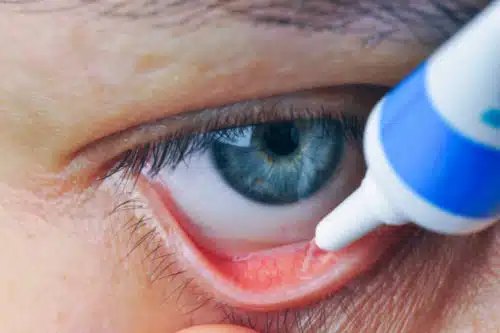
Lubricating gels and ointments coat your eyeballs and bring longer-lasting relief than eye drops. However, these remedies for dry eyes are thicker than drops, so they may interfere with vision and should only be used before you go to sleep.
Gels and ointments come with their own warnings:
-
-
- Thicker gels and ointments can interfere with meibomian glands — the glands along the eyelids near your eyelashes — making dry eye worse.
- Long-term use can mask the root cause of dry eye.
- Lack of good eyelid hygiene can cause more eye irritation.
- Patients can overuse gels and ointments when they don’t actually need them.
-
12. Change Your Environment
Sometimes, low humidity, high winds, dust, air conditioning, heat, and smoke can cause temporary dryness and irritation. Step away from the situation, if you can. If indoors, consider the room’s ambient moisture.
Here are a few ways to reduce eye irritation:
-
- Use a humidifier. Cool-mist humidifiers are best year-round if you have pets or children, while warm-mist humidifiers are best in cooler months. Warm-mist models are also less likely to encourage bacterial growth.
- Place a pan of water near your radiator or portable heater to help increase the moisture in the air.
- Avoid long-term exposure to dry or blowing air, as air conditioning can irritate the eyes.
- Use high-quality HVAC filters to block pollutants and allergens. Portable air purifiers with HEPA filters can also help reduce airborne allergens.
- Keep windows closed during high winds and on “poor-air days” when air pollution and smog are high. You should also close the windows if the wind is pushing them open.
13. Wear Wraparound-Style Sunglasses

Dry eye syndrome can cause photophobia. This condition is an abnormal sensitivity to light, and it can lead to squinting, eye pain, spots in your vision, forehead pain, and uncontrolled tears. Several types of eyewear can help ease your dry eye symptoms and keep them from getting worse:
-
-
-
-
- Wraparound sunglasses
- Onion glasses, which lock out irritating vapors
- FL-41 filtered lenses and blue-blocking lenses
-
-
-
Talk to Your Doctor
A DIY dry eyes remedy may help with mild, temporary cases of the condition. However, if the symptoms persist or get worse, or if you develop new symptoms, please see a qualified medical eye professional. These symptoms may suggest that dry eye syndrome is masking a more serious condition, such as blepharitis (inflammation of the eyelids) or ocular surface disease.
We have dry eye specialists who are committed to finding the right solution for you. Our doctors are focused on your well-being, preserving your vision and comfort, and helping you manage your long-term eye health. To schedule an appointment with an eye doctor to discuss treating dry eyes, schedule an appointment or contact us today.