Learn how cataract surgery in Prescott, AZ works, what happens during your evaluation, and how M&M Eye Institute helps patients in Prescott, PrescottValley, ChinoValley, and nearby communities choose the right path for clearer vision.
Cataract surgery in Prescott, AZ, can help restore clearer vision when cloudy lenses make reading, driving, night vision, or daily activities more difficult than before. Cataracts develop when the eye’s natural lens becomes cloudy, which can cause blurry vision, glare, faded colors, halos around lights, and trouble seeing in low light. Surgery is the only proven way to remove a cataract, but the right timing depends on your symptoms, your eye health, and how much cataracts are affecting your life.
Maybe headlights feel brighter than they should. Maybe your favorite book needs more light. Or maybe the hills, streets, and familiar faces around Prescott do not look as sharp as they once did. At M&M Eye Institute, our team helps patients understand what is changing, whether cataracts are the cause, and what treatment options may help them move forward with confidence.
What Cataracts Can Do To Your Vision
Cataracts usually develop slowly. At first, you may only notice small changes. Over time, those changes can begin to affect the things you do every day, including driving through Prescott Valley, reading at home, shopping in Chino Valley, or enjoying time outdoors in Northern Arizona.
Difficulty reading, driving, or seeing faces clearly
Some of these symptoms can also be caused by other eye conditions. That is why a cataract evaluation matters. Your doctor can check whether cataracts are causing your vision changes or whether another issue needs attention.
Understanding Cataract Surgery
Cataracts cannot be removed with eye drops, medication, supplements, or lifestyle changes. When cataracts begin to interfere with your quality of life, cataract surgery may be the most effective treatment.
During cataract surgery, your surgeon removes the cloudy natural lens and replaces it with a clear artificial lens called an intraocular lens (IOL). This new lens helps light focus more clearly again, which can improve vision affected by cataracts.
Modern cataract surgery is typically an outpatient procedure. Many patients go home the same day and continue healing over the next several days and weeks. Your doctor will explain what to expect before surgery, how to prepare, which eye drops or medications you may need, and when to return for follow-up care.
Choosing The Right Lens For Your Lifestyle
Cataract surgery is not only about removing the cloudy lens. It is also a chance to choose an artificial lens that fits your vision needs, eye health, and lifestyle.
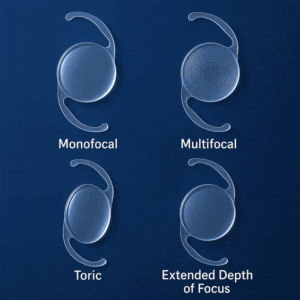
A standard monofocal lens usually corrects vision at one main distance. Many patients choose distance vision, then use reading glasses for near tasks after surgery.
Advanced technology lenses may offer a broader range of vision or help reduce dependence on glasses for certain activities. These options may include lenses designed for distance, intermediate, near vision, astigmatism correction, or a more customized vision goal.
Your doctor will help you understand which lens options may work best for your eyes. Not every patient is a candidate for every lens. Your recommendation may depend on your cornea, retina, prescription, astigmatism, dryeye,glaucomarisk, lifestyle, budget, and expectations.
What Happens During A Cataract Evaluation?
A cataract evaluation at M&M Eye Institute starts with a detailed eye exam. Your care team will measure your vision, evaluate your eye health, check for cataracts, and look for other conditions that could affect your results.
If cataract surgery may be the right next step, your visit may include a discussion about:
The goal is to help you make an informed decision, not rush you through the process. Whether you live in Prescott, Prescott Valley, Chino Valley, Dewey-Humboldt, or another nearby community, M&M Eye Institute can help you understand your cataract surgery options in Prescott, AZ, and plan your next step.
Pre-Surgery: How to Prepare
One Week Before Surgery:
You’ll return to your eye doctor for pre-operative testing to determine the correct IOL for your eye.
Make plans for transportation on the day of surgery—you won’t be able to drive yourself home.
If you live alone, consider arranging help for the first day or two after surgery.
The Night Before Surgery:
Follow any instructions your doctor gives, including using prescribed eye drops.
Do not eat or drink after midnight (unless otherwise instructed).
Avoid alcohol and get a good night’s sleep.
Let your provider know if you take any daily medications.
The Day of Surgery:
Do not eat or drink anything in the morning of your procedure.
Dress comfortably and avoid wearing makeup, lotions, perfumes, or colognes.
Arrive early for check-in and bring any paperwork or questions you may have.
The procedure is quick (often taking less than 30 minutes), and most patients return home within two hours.
What About Insurance?
Most insurance plans and Medicare cover cataract surgery with a standard monofocal lens. This includes:
Surgeon fees
Anesthesia
Surgery center charges
Those costs may not be covered if you choose an advanced lens or other premium services. We’ll help you navigate your benefits and clearly break down any costs involved.
Final Steps: Medical Clearance
Before your surgery, your primary care physician may conduct a brief evaluation to ensure you’re medically fit for the procedure. This might include checking for conditions such as high blood pressure or diabetesthat could affect your recovery.
Know Your Cataract Surgery Options In Prescott
If cataracts are making your vision cloudy, dim, or difficult at night, you do not have to guess what comes next. Schedule a cataract evaluation with M&M Eye Institute to find out whether cataract surgery is right for you, compare lens options, and get a clearer plan for protecting your vision.
FAQ: Cataract Surgery In Prescott, AZ
The first signs of cataracts often include blurry vision, glare, halos around lights, faded colors, and trouble seeing clearly at night. Some patients also notice that their glasses prescription changes more often than usual.
You may want to consider cataract surgery when cataracts interfere with daily activities such as reading, driving, working, watching TV, or seeing clearly in low light. Your eye doctor can confirm whether cataracts are the main cause of your symptoms.
Yes. M&M Eye Institute provides cataract care for patients in Prescott, Prescott Valley, Chino Valley, and nearby Northern Arizona communities. A cataract evaluation can help determine whether surgery is appropriate and which lens options may fit your goals.
A cataract evaluation can take longer than a routine vision check because it may include dilation, measurements, testing, and a discussion about lens options. Plan for extra time, especially if your doctor needs additional testing before recommending surgery.
Lens options may include standard monofocal lenses and advanced technology lenses. The best option depends on your prescription, eye health, astigmatism, lifestyle, and how much you want to rely on glasses after surgery.
Most insurance plans and Medicare often cover medically necessary cataract surgery with a standard monofocal lens, but coverage can vary by plan. Advanced technology lenses or premium services may involve additional out-of-pocket costs.
You can schedule online through the M&M Eye Institute website or call the location most convenient for you in Prescott, Prescott Valley, or Chino Valley. The team can help direct you based on your symptoms, vision needs, and eye health history.
Related Posts
Schedule Your Eye Exam Online
Whether you’re here for a routine exam or managing something more complex, our experienced team guides you—every step of the way.
To provide the best experiences, we use technologies like cookies to store and/or access device information. Consenting to these technologies will allow us to process data such as browsing behavior or unique IDs on this site. Not consenting or withdrawing consent, may adversely affect certain features and functions.
Functional
Always active
The technical storage or access is strictly necessary for the legitimate purpose of enabling the use of a specific service explicitly requested by the subscriber or user, or for the sole purpose of carrying out the transmission of a communication over an electronic communications network.
Preferences
The technical storage or access is necessary for the legitimate purpose of storing preferences that are not requested by the subscriber or user.
Statistics
The technical storage or access that is used exclusively for statistical purposes.The technical storage or access that is used exclusively for anonymous statistical purposes. Without a subpoena, voluntary compliance on the part of your Internet Service Provider, or additional records from a third party, information stored or retrieved for this purpose alone cannot usually be used to identify you.
Marketing
The technical storage or access is required to create user profiles to send advertising, or to track the user on a website or across several websites for similar marketing purposes.