Cataracts: Causes, Symptoms, Types, and Treatment Options
For many adults, cataracts are a natural part of aging. Unfortunately, their development and progress can negatively impact vision. Cataracts can be the reason your glasses or contacts may not keep your vision in focus. They can also cause the images you see to blur, colors to dull, and even make it hard to see at night.
What is a Cataract?
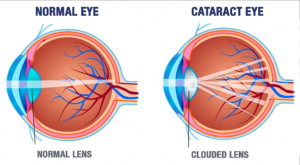
The eye has two natural lenses: one on the surface (the cornea) and a second, the crystalline lens, which lies behind the pupil and the colored iris. These two lenses work together to focus images onto the retina at the back of your eye.
A standard crystalline lens is transparent at birth and, for most people, remains so into young adulthood. A cataract clouds this lens, altering how light enters the eye. Cataracts can cause blurry or dim vision because light is not properly transmitted to the retina, which transmits images to the brain.
Who is Affected by Cataracts?
Cataracts are extremely prevalent – they affect more than 22 million people nationwide who are over 40 years old. They are the current leading cause of blindness among adults in the United States. By 2020,Prevent Blindness America (PBA) estimates that more than 30 million Americans will have cataracts.
Another startling statistic: PBA says that by age 80, more than half of Americans will have cataracts. While cataracts are much more common in adults over 40, they can occur in young adults, children, and even babies.
What Causes Cataracts?
More often than not, cataracts are a natural part of aging. They usually develop after the age of 40 and are typically age-related. While the exact cause of cataracts is unknown, possible risk factors may include:
Cataracts typically develop over time. At first, most cataracts will have little to no effect on your vision. However, over months or even years after a cataract begins to develop, you may notice your vision blurring slightly as if you are looking through a clouded piece of glass. You may also notice that colors appear duller, light from the sun may seem brighter or more glaring, or your night vision may decrease.
The type of cataract will affect the symptoms you experience.
Types of Cataracts
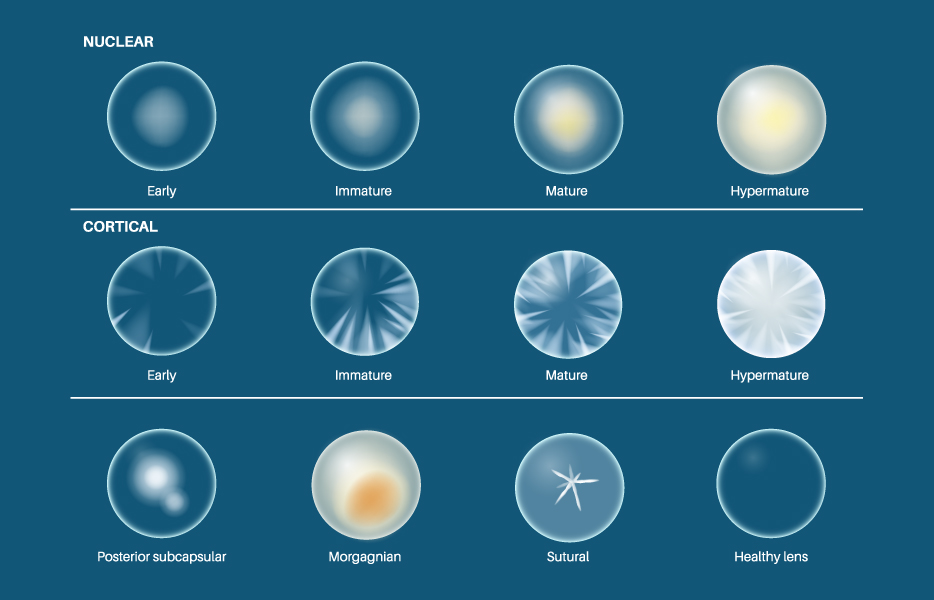
Cataracts can come in several different forms, including:
Nuclear cataracts: These form deep in the nucleus, or central zone, of the eye’s lens. These are typically associated with aging. Symptoms of nuclear cataracts may include a temporary improvement in near vision, which is short-lived and disappears as the cataract worsens.
Cortical cataracts: These cataracts typically start in the lens periphery and progress toward the center. This type of cataract occurs in the lens cortex, the region surrounding the central nucleus.
Subcapsular cataracts: These cataracts form at the back of the lens and are more common among people with diabetes or those taking high doses of steroid medications. These cataracts usually don’t show symptoms right away.
Cataract Treatment Options
When cataract symptoms first appear, vision may temporarily improve with new glasses, bifocals, or other visual aids. When cataracts have progressed and begin to seriously affect your daily life and impair your vision, cataract surgery may be a good option for you.
Cataract surgery is a standard procedure that helps patients regain vision and improve their quality of life. This involves lens replacement surgery to remove the cataract.
Lens Replacement Surgery
On the day of the procedure, you are given a mild sedative to help relax, and eye drops are used to dilate your pupils. An anesthetic will be used to numb your eye during the operation.
During the procedure, a small incision is created and the natural crystalline lens, which has become clouded, is removed from the eye. Once this lens is removed, a new artificial lens is inserted. This replacement lens allows patients to regain the level of vision they had before developing the cataract. Advancements in technology have created a range of customized lenses tailored to each patient’s needs.
The actual surgery – removing the cataract and inserting an artificial lens – typically takes ten to fifteen minutes. After the procedure is complete, your doctor will monitor your condition for a while before you can have someone drive you home. The entire process, from the time you arrive at the surgical center to the time you go home, should take about a half-day.
Find out more about how to prepare for cataract surgery here.
Find out more about lens replacement surgery here.
Recovery from Cataract Surgery
In most cases, the healing process after cataract surgery will take a few days. Some patients have described the feeling post-surgery as slightly uncomfortable, similar to having an eyelash in their eye. Your vision may be blurry immediately after the procedure and for a few days afterward.
It may take up to one month for your eyes to fully heal. Most doctors will recommend limiting vigorous physical activity for the first week or two following the procedure. You should also avoid deep bending or lifting for a couple of weeks, as this can increase eye pressure.
To help your eyes heal, use the ointment or eye drops prescribed by your doctor. This will decrease swelling and protect against infection.
Glasses may still be necessary after cataract surgery.
After your surgery, you will have follow-up visits with your doctor to ensure your eyes are healing correctly. These visits will also allow you to ask any follow-up questions about activities or medications you are taking. After the procedure, your vision will improve every day. Many patients find they can see brighter colors and have clearer, sharper vision than they have had in a long time.
Take the Next Step Toward Clearer Vision
Cataracts do not have to define how you see the world. If you notice cloudy vision, faded colors, or trouble driving at night, a simple cataract evaluation can show whether lens replacement surgery is right for you. Modern cataract surgery is quick, highly effective, and tailored to your eyes, so you can get back to reading, traveling, and enjoying the people and activities you love.
If you are ready to learn more, schedule a cataract consultation with an eye doctor you trust. Together, you can review your symptoms, talk through lens options, and create a personalized plan that protects your vision and your independence for years to come.
FAQ: Cataracts
Cataracts are cloudy areas that form in the eye’s natural lens. As the lens becomes cloudy, vision may look blurry, dim, yellowed, or less sharp. Cataracts often develop slowly, which means some people do not notice symptoms right away.
Early signs of cataracts may include blurry vision, dull colors, glare, halos around lights, trouble seeing at night, or frequent changes in your glasses prescription. Many people first notice cataracts when night driving, reading, or seeing in bright sunlight becomes harder.
Aging is the most common cause of cataracts. Other risk factors may include diabetes, high blood pressure, long-term sun exposure, smoking, eye inflammation, eye injury, family history, and certain medications such as steroids.
No. Cataracts do not go away on their own. Glasses, brighter lighting, or anti-glare lenses may help in the early stages, but cataract surgery is the only way to remove a cataract once it significantly affects vision.
Schedule an eye exam if you notice cloudy vision, glare, faded colors, trouble reading, or difficulty driving at night. M & M Eye Institute serves patients in Prescott, Prescott Valley, Chino Valley, and surrounding Northern Arizona communities.
During cataract surgery, the cloudy natural lens is removed and replaced with a clear artificial lens. Your eye doctor will review your lens options, explain what to expect, and help you choose the one that best meets your vision needs and lifestyle.
Many patients notice vision improvement within a few days, but full healing can take several weeks. Your doctor may prescribe eye drops, recommend activity restrictions, and schedule follow-up visits to ensure your eye is healing properly.
Some patients still need glasses after cataract surgery, especially for reading or certain close-up tasks. Your need for glasses depends on your eye health, lens choice, astigmatism, and overall vision goals.
Related Posts
Schedule Your Eye Exam Online
Whether you’re here for a routine exam or managing something more complex, our experienced team guides you—every step of the way.
To provide the best experiences, we use technologies like cookies to store and/or access device information. Consenting to these technologies will allow us to process data such as browsing behavior or unique IDs on this site. Not consenting or withdrawing consent, may adversely affect certain features and functions.
Functional
Always active
The technical storage or access is strictly necessary for the legitimate purpose of enabling the use of a specific service explicitly requested by the subscriber or user, or for the sole purpose of carrying out the transmission of a communication over an electronic communications network.
Preferences
The technical storage or access is necessary for the legitimate purpose of storing preferences that are not requested by the subscriber or user.
Statistics
The technical storage or access that is used exclusively for statistical purposes.The technical storage or access that is used exclusively for anonymous statistical purposes. Without a subpoena, voluntary compliance on the part of your Internet Service Provider, or additional records from a third party, information stored or retrieved for this purpose alone cannot usually be used to identify you.
Marketing
The technical storage or access is required to create user profiles to send advertising, or to track the user on a website or across several websites for similar marketing purposes.